
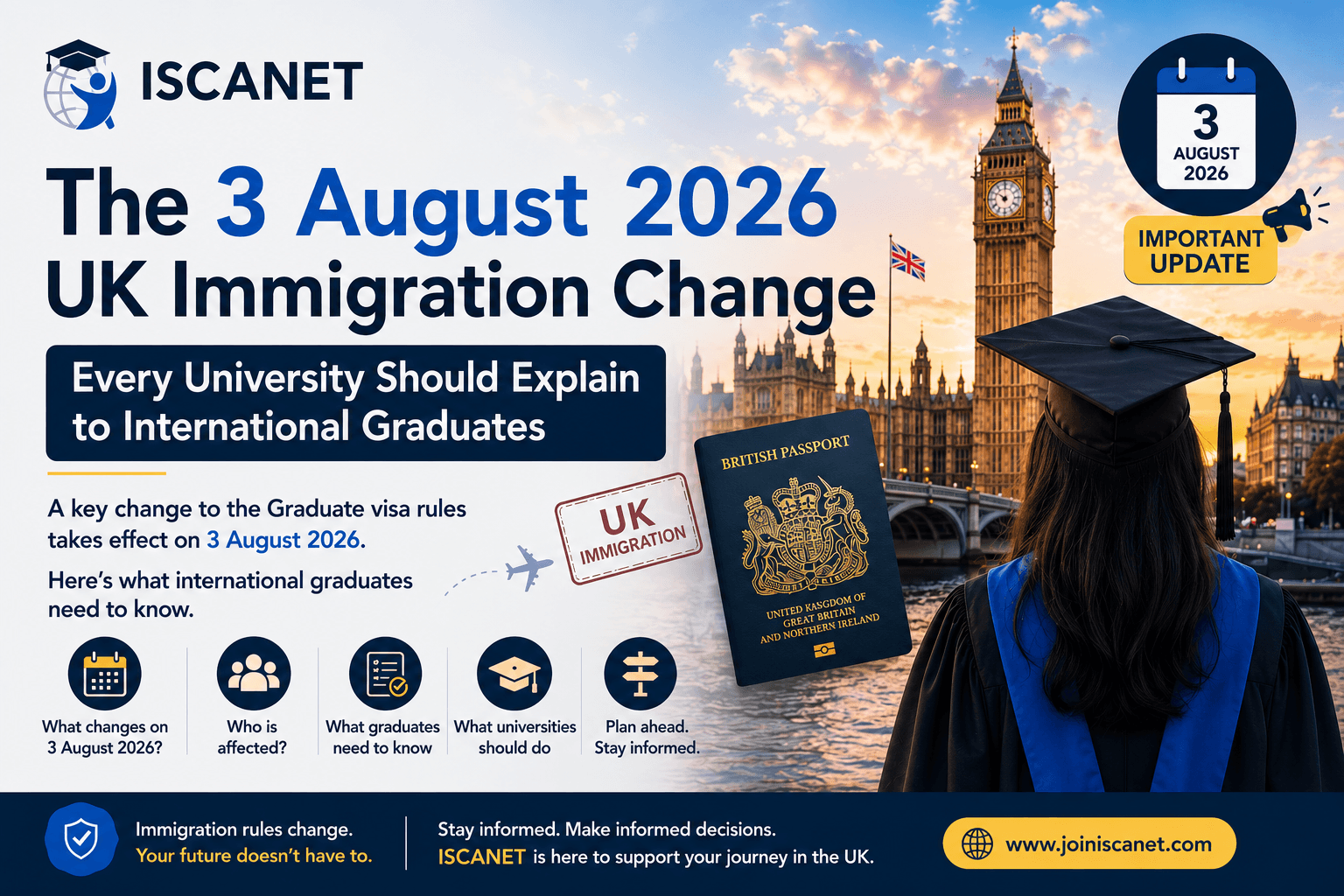
International graduates already face enough uncertainty when navigating life after university. That is why universities have a responsibility to communicate immigration changes clearly, accurately and in plain English.
From 3 August 2026, an important but relatively targeted change to the UK's Graduate visa rules comes into effect. While it does not affect every graduate directly, it highlights why staying informed about immigration policy matters throughout your journey in the UK.
What is changing on 3 August 2026?
Previously, if someone was already in the UK on a Graduate visa and had a baby in the UK, that child could not apply to become a dependant under the Graduate route.
From 3 August 2026, this changes.
Children born in the UK to a parent who holds permission under the Graduate route will now be able to apply as a dependant under that same route, provided the application is made from within the UK.
For graduates who are starting families while living in the UK, this provides greater clarity and removes an unnecessary gap in the immigration rules.
Why does this matter?
At first glance, this may appear to affect only a small number of people.
However, there is a much bigger lesson.
UK immigration rules evolve regularly. Small amendments can have significant consequences depending on your circumstances. Understanding these changes early helps graduates make informed decisions rather than discovering new rules after they have already affected them.
Whether you are applying for a Graduate visa, planning to switch to a Skilled Worker visa, considering settlement in the future, or simply planning your next career move, staying informed is essential.
What universities should be doing
Many international students receive excellent academic support but relatively little practical guidance once they approach graduation.
Universities should ensure graduates understand:
What has changed and when it takes effect.
Who is affected by the new rule.
Whether they need to take any action.
Where to obtain official immigration advice.
How the change fits into the wider UK immigration landscape.
Clear communication reduces confusion, unnecessary anxiety and costly mistakes.
The wider immigration picture
The 3 August change arrives during a period of broader immigration reform.
Graduates should also be aware of wider policy developments, including:
Changes to university sponsor compliance requirements.
Planned changes to the Graduate visa from January 2027.
Ongoing reviews affecting Skilled Worker routes and settlement pathways.
Continuing adjustments to English language and sponsorship requirements.
Not every proposal is in force yet, but understanding what is confirmed, what is planned and what is still under consultation helps graduates prepare instead of reacting at the last minute.
Our advice to international graduates
Regardless of your current visa status:
Stay informed using official UK Government guidance.
Don't rely solely on social media rumours or unofficial WhatsApp groups.
Plan your career early rather than waiting until your visa is close to expiring.
Build the skills employers are actively looking for.
Keep your immigration documents organised.
Seek professional advice where appropriate.
Immigration planning and career planning should always go hand in hand.
How ISCANET Can Help
At ISCANET, our mission goes beyond helping international students find jobs. We help students and skilled migrants understand the realities of building a successful career in the UK by providing practical resources, AI-powered career tools, employability support and timely updates on immigration and workplace developments.
Our goal is simple: help international talent make informed decisions with confidence.
Disclaimer
This article is intended for general information only and should not be treated as legal or immigration advice. Immigration rules can change, and individual circumstances vary. Where applicable, readers should refer to the latest official UK Government guidance or seek advice from a qualified immigration adviser before making decisions based on immigration rules.
Comments (0)
Leave a comment
No comments yet. Be the first!